
Colbert County Arrest Warrants Explained
A Colbert County arrest warrant is a court's order to arrest someone and bring that person before a judge. Alabama Rule 3.1 allows it after an indictment. Or after probable cause under Rule 2.4. Probable cause means facts giving reason to believe an offense occurred and the named person committed it. That is the test. In Colbert County, the charge sets the route. Felonies go through the Circuit Court of Alabama, the Thirty-First Judicial Circuit, sitting in Colbert County. Misdemeanors and preliminary felony matters belong to the Colbert District Court. A city charge can start with a magistrate and municipal court. The paper names its issuing and return courts. Trust that, not the agency that served it.
Colbert County Arrest Warrant Cause
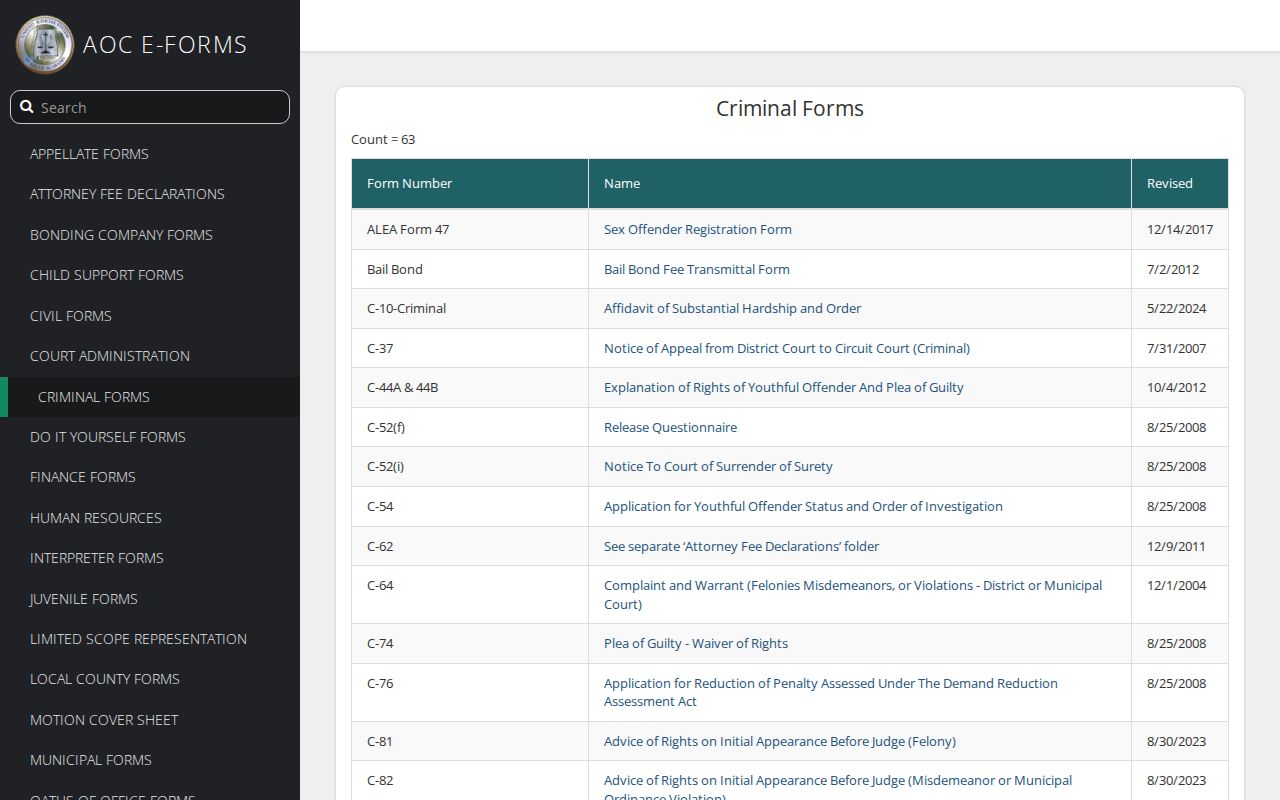
Rule 3.1 ties a Colbert County arrest warrant to an indictment or a probable-cause finding. The judge works from a complaint and sworn facts. Those papers let the magistrate weigh whether arrest process fits, or whether a summons will do instead. The sheriff's Most Wanted page plays no part in that call; it is a later public display, and only for cases the sheriff picks. For the paperwork itself, the official Alabama criminal eForms index carries the C-64 Complaint and Warrant form, used for a felony, a misdemeanor, or a violation in district or municipal court. It is a blank template. No real defendant, charge, case number, or Colbert County arrest warrant record appears on it.
A search warrant does not belong on this person-status route. Alabama Rule 3.8 and Rule 3.11 govern a search for property or evidence and the return that follows. An arrest warrant is different. It commands custody of a person. Blend the two and a Colbert County requester can land with the wrong custodian, or with material an investigation keeps restricted.
Inside a Colbert County Arrest Warrant
Alabama Rule 3.2 lists the core fields of a Colbert County arrest warrant. It must identify the defendant by name or description. It must state the offense and command the arrest. A return court gets named too. Authorized judicial or clerk approval, execution entries, and return notations fill in the rest, so check each field against the current court file before relying on it.
| Defendant | The name or identifying description stated in the arrest process. |
|---|---|
| Offense | The charged offense tied to the complaint, indictment, or probable-cause finding. |
| Authority | The issuing judge, magistrate, or authorized clerk signature. |
| Command | The direction to arrest and bring the person before the issuing or nearest accessible judge. |
| Return court | The court designated to receive the process and case action. |
| Bond language | Any preset bond or personal-recognizance terms included when the court uses them. |
| Execution and return | The date, manner, officer signature, and clerk return after service. |
Alabama sets no single warrant-number format. No rule fixes a number pattern for Colbert County either. When asking the clerk to confirm status, use the case number or identifier printed on the Colbert County court record.
Colbert County Arrest Warrant Courts
Which court holds a Colbert County arrest warrant? The Colbert court jurisdiction page answers that. Circuit Court takes felonies and appeals from lower courts. District Court handles misdemeanors, traffic, and preliminary felony proceedings. Municipal courts in Colbert County keep city ordinance, traffic, and municipal-misdemeanor calendars. Probate Court is not the place for a criminal warrant question, and the official Colbert County judges page names the judicial offices serving the Thirty-First Judicial Circuit.
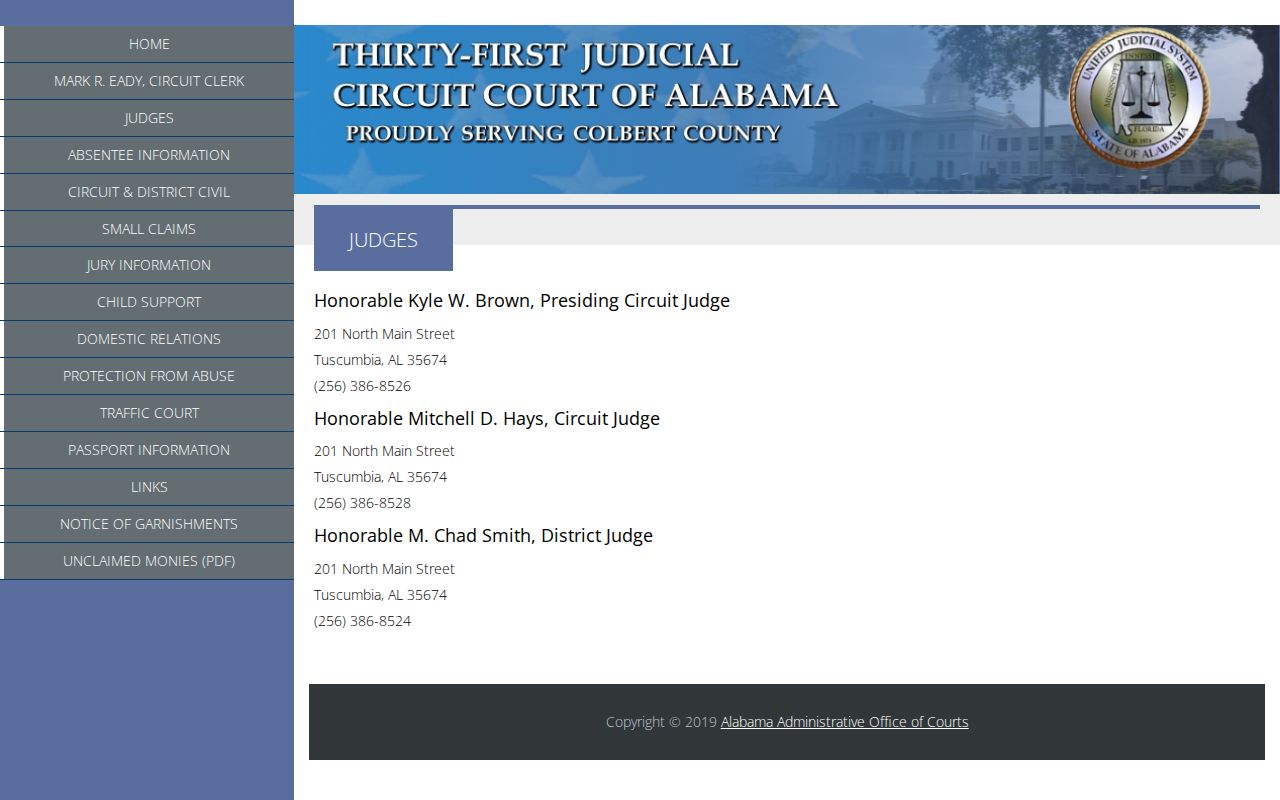
The roster helps with office routing. The paper names the issuing and return court. Presiding Circuit Judge Kyle W. Brown, Circuit Judge Mitchell D. Hays, and District Judge M. Chad Smith appear on the current court site. Circuit Clerk Mark R. Eady holds access to circuit and district case records. Municipal judges and magistrates take city matters. These offices issue and keep court process, while the sheriff and police departments serve it.
Serving Arrest Warrants in Colbert County
Under Alabama Rule 3.3, any Alabama law-enforcement officer may execute an arrest warrant. The Colbert County Sheriff's Office serves county court process. It runs the jail as well. City police may serve municipal or other authorized process, and ALEA or another state agency may appear when the case or encounter falls within its role. Issuer, return court, and serving agency can differ. Execution means the arrest. Return is the officer or clerk notation recording the manner and date of execution or nonexecution. A warrant is not closed just because you cannot find it on a public web page. The Most Wanted display is curated. It claims no complete list. It posts no update cadence either. The inmate roster in Colbert County is a custody tool. It is not an arrest-warrant database. After an arrest comes booking and an initial appearance, and Rule 4.4 covers identity, the charge, counsel and silence rights, release conditions, and, in a felony case, notice of the right to a preliminary hearing. Those steps follow service, and they still do not turn the public roster into the court's official warrant-status record.
Colbert County Arrest Warrant Access
A self-check in Colbert County works best across a few official channels. Start with the court named on any notice or known case. Circuit Clerk Mark R. Eady routes circuit and district files through the courthouse office. A city matter belongs to its municipal clerk or magistrate. The sheriff answers office and custody questions. But only the issuing court controls whether its arrest process has been recalled, withdrawn, superseded, or otherwise resolved. With no case details in hand, ask the Colbert County Sheriff’s Office which office fits the request. Call 256-383-0741. The office sits at 201 North Main Street, Tuscumbia. Its email channel is not secure and is not monitored at all times, so urgent or sensitive details belong in a phone call or an appropriate in-person exchange. Alabama’s public-record request procedure backs a specific written request to the custodian. Name the court, date range, case or incident number, and record type. The Colbert County sheriff posts no copying fee, so ask about fees and redaction before ordering anything. Unserved investigative process, juvenile files, and youthful-offender records can be restricted.
Comparing Arrest, Summons, and Bench Warrants
Each paper demands a different response. A summons orders an appearance rather than an arrest when Rule 3.1 permits that course. An arrest warrant commands custody. It rests on an indictment or probable cause. Bench warrants and writs usually follow a missed duty inside an open case. A Colbert County summons ignored today can still turn into arrest process later.
| Process | Basis | What It Requires | Key Record |
|---|---|---|---|
| Arrest warrant | Indictment or probable cause | Law enforcement arrests and brings the person before a judge | Complaint or indictment, warrant, execution, return |
| Summons | Charge where court permits response without initial custody | The person appears at the listed date, place, and purpose | Summons, service return, appearance fields |
| Bench warrant | Missed date or unmet court duty | Arrest process until the court-directed response occurs | FTA event, writ, return, recall entry |
Exact docket wording matters here. The Colbert County bench warrant search covers failure-to-appear records and recall questions.
Colbert County Arrest Warrant Release
Rule 7.2 gives statewide bail and release context. But a judge decides the terms for a specific Colbert County case. General state schedule figures are not a quote for one warrant. Once the court or jail directs a bond, the sheriff’s posted process separates cash, property, and licensed-surety methods. The Colbert County Jail instructions lay out the local bond steps.
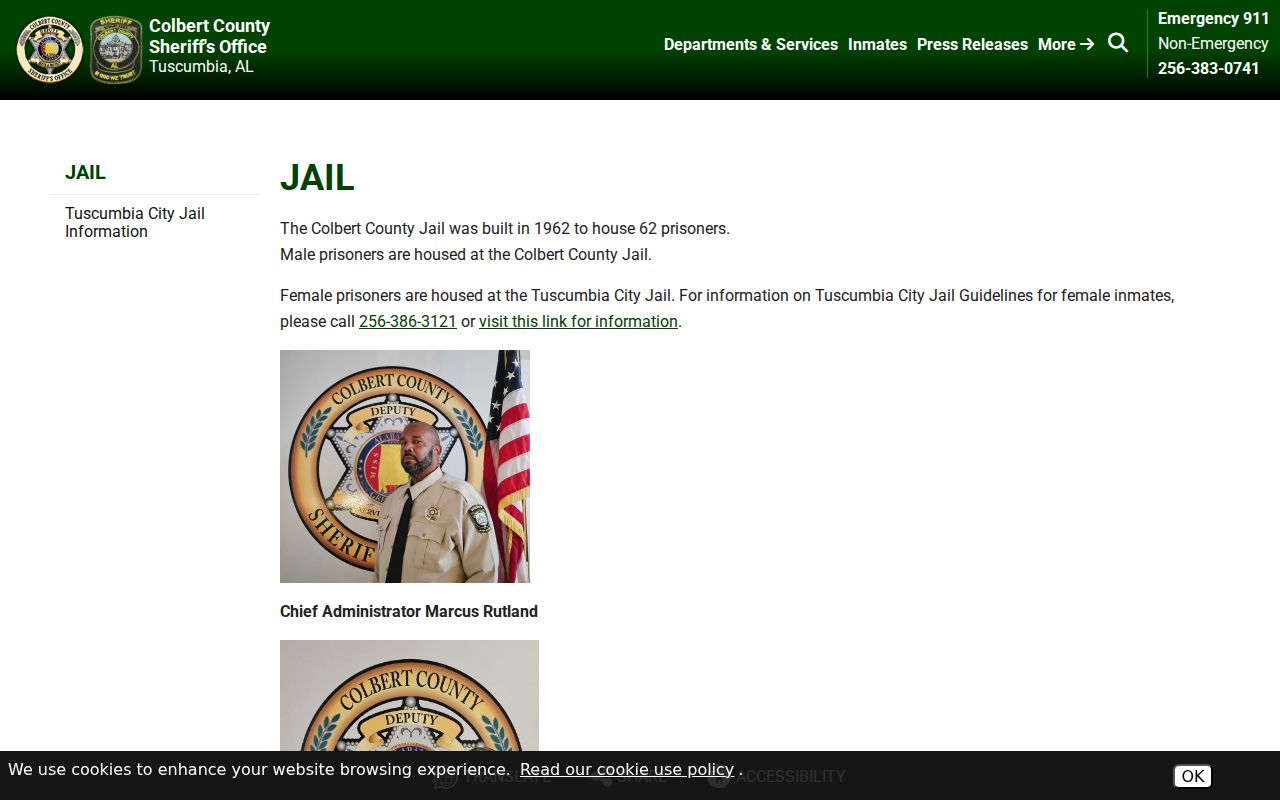
Once a judge sets bond, the jail side handles the money and the paperwork. It cannot tell you whether an arrest warrant is outstanding. That answer belongs to the issuing court. Every bond method Colbert County posts carries a $35 bond-filing fee, paid by money order to the Circuit Clerk within three working days. The sheriff is firm that cash and personal checks will not be accepted for it. Cash and property bond steps run on weekdays from 8:00 to 4:00. A property bond needs the Revenue Commissioner's assessment printout, assessed value that covers the full bond, and every listed owner present. For bond questions, call 256-386-8551.
If There's an Arrest Warrant for You
Never test a Colbert County arrest warrant through a police encounter you could avoid. Confirm the issuing court, the case identifier, and the warrant's status through counsel, the court, or the sheriff first. A lawyer can raise a lawful surrender, walk you through the likely initial appearance, get bond ready, or ask whether a motion to recall or quash is on the table. A clerk may explain procedure, but cannot tell you which legal choice is best.
- Record the exact court, case number, charge, and warrant language from the official notice or file.
- Have counsel or the authorized office confirm that the arrest warrant remains open and identify the return court.
- Plan voluntary surrender, appearance, transportation, medication, and bond paperwork only under current court or legal instructions.
- Keep the order, receipt, and court confirmation that documents any recall, release, or later disposition.
Important: An active Colbert County arrest warrant can lead to custody; seek legal advice before arranging surrender, bond, or a court filing.
The wider Colbert County warrant records overview maps the countywide roles of the courts, clerk, and sheriff.
Colbert County Arrest Warrant Boundaries
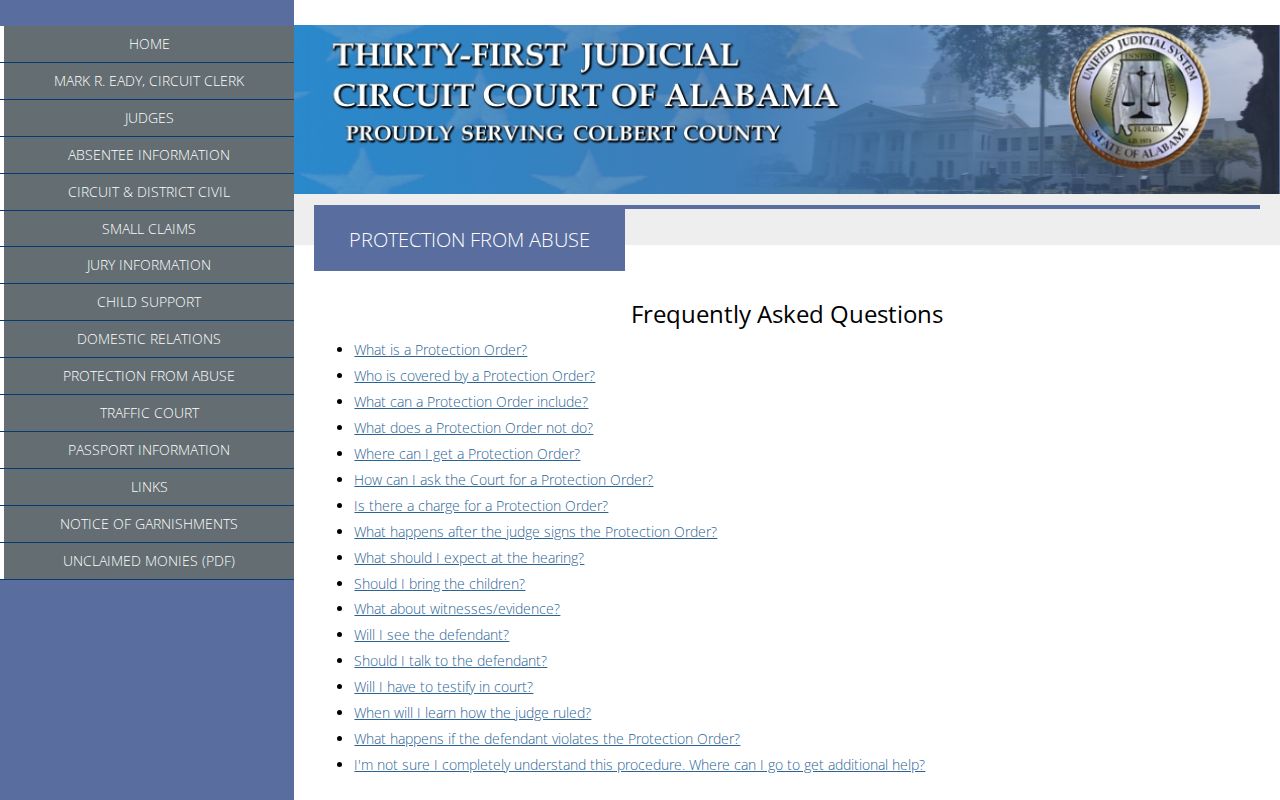
Safety matters can take a different legal path from a warrant question. The Colbert County Protection from Abuse page explains one route. Violating a protection order may be contempt or a Class A misdemeanor. Arrest can follow with or without a warrant. Where it fits, a plaintiff may file a police report, bring a copy to the District Attorney’s Office, and then request a warrant from district or municipal court.
This safety-sensitive work belongs with emergency, court, and legal-aid help, not a broad public name search. Alabama §12-15-133 restricts juvenile legal and social files. Juvenile law-enforcement files face added limits under §12-15-134. Youthful-offender identifying records get extra protection under §15-19-7. The Alabama Public Records Act gives residents a general inspection right. Even so, a public result can be absent in Colbert County while a court record still exists.