
Colbert County Active Warrants Explained
An outstanding warrant is simply court process that a judge has signed but that no one has yet served, withdrawn, recalled, or resolved. Colbert County paperwork carries different labels for the same basic thing. You may see arrest warrant, warrant of arrest, bench warrant, writ of arrest, alias writ of arrest, or failure-to-appear warrant. The word capias does not appear on the county's official pages. Whatever the label, the record's own wording plus the issuing court's status control. Two courts split the work in Colbert County. The Circuit Court of Alabama, Thirty-First Judicial Circuit, Colbert County takes felonies and other circuit matters, while Colbert District Court handles misdemeanors, traffic, preliminary felony proceedings, child-support cases, and the rest of its limited-jurisdiction docket. City cases stay with municipal courts. A judge or magistrate signs the warrant. The Colbert County Sheriff, city police, or another authorized Alabama officer may then serve it under Rule 3.3.
No Full Colbert County Warrant List
The Colbert County Sheriff's Most Wanted page is a hand-picked public showcase, not a full register of Colbert County outstanding warrants. There is no name field on the public gate. No date filter, court filter, total active count, update timestamp, or promise of completeness appears either. The mobile and slideshow views show selected records too, and neither posts an update cadence. The sheriff's inmate roster is not a stand-in for a warrant list. A roster tracks custody and booking, in both current and released views, while unserved court warrants sit outside it. A past booking does not prove a warrant remains open, and an absence from either system does not prove that no warrant exists.
Key limit: A blank public list is inconclusive. Confirm Colbert County warrant status with the sheriff and the court that issued the process.
How Colbert County Tracks Active Warrants
Warrant information in Colbert County travels through several record systems. The court creates the complaint, warrant, writ, appearance event, return, and any later recall or withdrawal. The sheriff then handles service, execution, custody, and law-enforcement record keeping. Its Records/Data Bureau maintains criminal records, fingerprints, prisoner photographs, and agency statistics. The bureau can reach ACHIC, NLETS, and NCIC, but those criminal-information systems are closed to public searches. Alabama law does require agencies to report unserved arrest warrants and to update that reporting after service or withdrawal. That duty under Alabama Code section 41-9-627 supports criminal-justice work. It builds no public statewide name index. So a member of the public turns to the Colbert County Circuit Clerk, a municipal clerk, traffic channels, a focused public-record request, or the sheriff's office, depending on the case.
Note: Colbert County publishes no update cadence, so neither a missing entry nor an old entry should be treated as current proof.
Colbert County Warrant Status Lifecycle
A warrant status is an event trail, not a single "active" stamp. Alabama Rule 3.1 covers issuance after an indictment or probable-cause finding and allows a summons alternative. Rule 3.2 spells out the document's core terms, and Rule 3.3 governs execution, endorsement, and return. Later court action can withdraw, supersede, recall, or otherwise resolve the process in Colbert County. Only a current court or authorized agency record shows which stage applies.
The simplest Colbert County warrant flow is: issued by the court → sent for service → executed or returned → case resumes or court acts → later status confirmed. A failure to appear can add another branch, including a bench warrant or writ of arrest. Missing bond-related court may also trigger conditional forfeiture, which is a separate court process and should not be collapsed into the warrant label.
- Issued
- The court authorized the warrant or writ.
- Executed
- An authorized officer carried out the arrest or service.
- Returned
- The officer or clerk recorded the manner and date of execution or nonexecution.
- Recalled
- The issuing court withdrew or canceled the warrant.
- Alias writ
- Later arrest process after an earlier summons or writ issue; use the exact docket label.
Inside an Active Warrant Record
A complete Colbert County warrant record can name or describe the person, list the charged offense, identify the issuing judge or magistrate, command an arrest, give the return court, and carry the signature plus any bond or personal-recognizance language. The execution return closes it out. A failure-to-appear notice may add a case number, the missed date, a new date, a payment or appearance choice, and a warning about warrant or license action. The Most Wanted entries published online reveal only a smaller slice of that schema.
| Record Identifier | Use the court's exact case or warrant number, such as the official form's ID / year / number pattern. |
|---|---|
| Person | Name or identifying description stated in the warrant process. |
| Charge or Reason | Alleged offense, FTA, or other stated basis; it is not a conviction. |
| Issuing Authority | Judge, magistrate, or authorized clerk tied to the court file. |
| Return Court | Court designated for the person's appearance or the officer's return. |
| Bond Terms | Only the terms actually stated or later set by the court. |
| Current Status | Issued, served, returned, withdrawn, superseded, recalled, or otherwise resolved. |
The charge field names an allegation or the reason behind the process. A short label on a public card is not a case result. For case events, use the court file. For current warrant status in Colbert County, ask the issuing court.
Colbert Sheriff Records and Warrants
Read the Colbert County Sheriff FAQ for the office's published service and records roles.
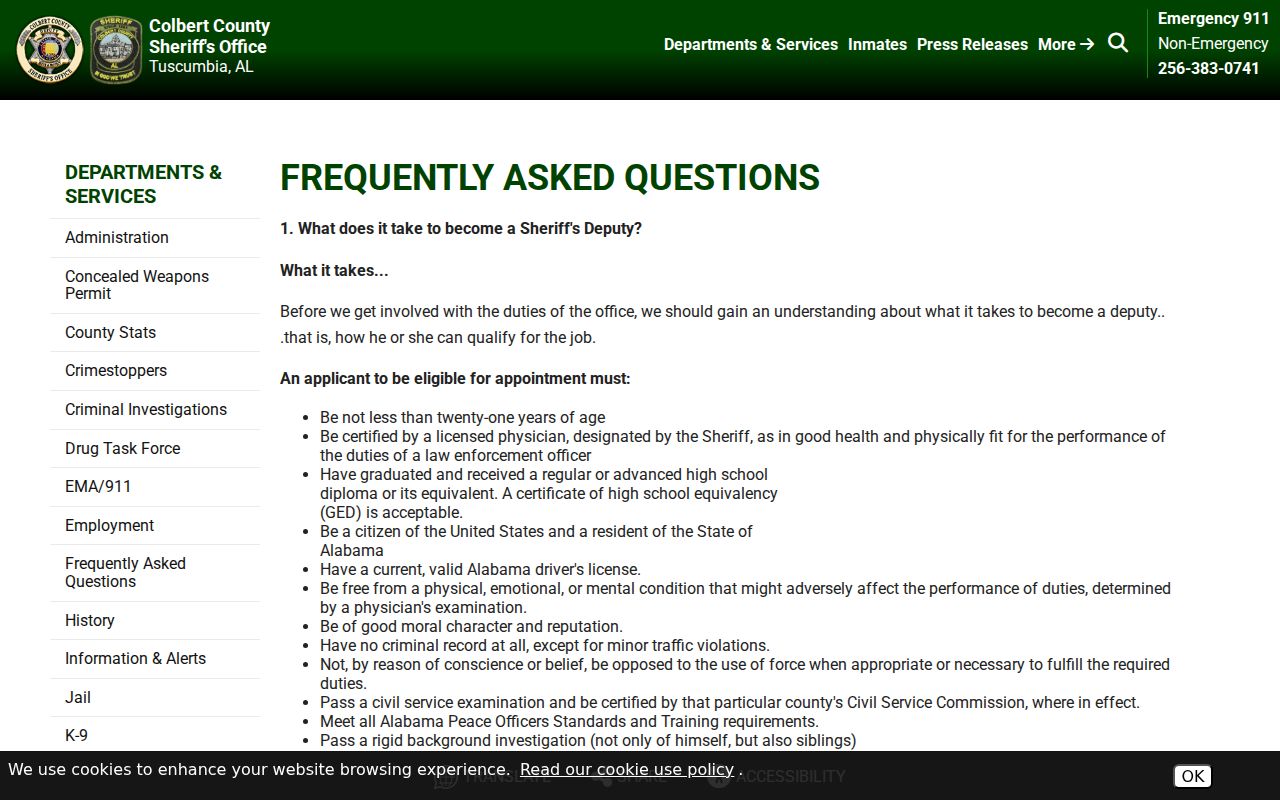
The sheriff's FAQ says a District Court officer staffs the bailiffs, serves bench warrants, brings prisoners before the court, and handles fugitive and extradition-waiver work in Colbert County. It also describes the Records/Data Bureau. Those are working routes, but the FAQ promises no instant free public name search. The alerts signup delivers agency notifications, not personal warrant-status alerts. A focused request should state the record type, case or incident number, and date range, then ask about redaction, copies, timing, and any fee. The sheriff posts no current fee schedule. See the sheriff administration page for the office roles the agency publishes today.
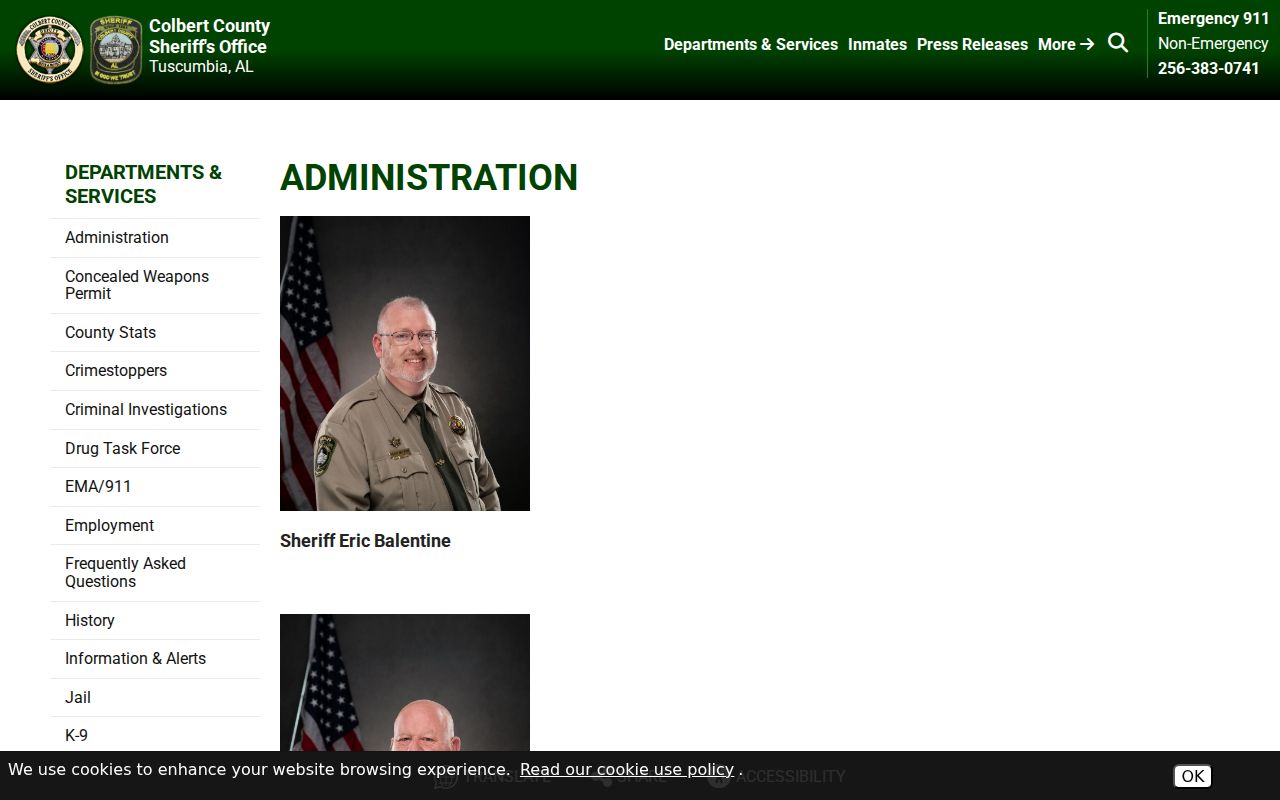
The administration page lists functions such as chief deputy, chief clerk, civil clerk, criminal clerk, reimbursement clerk, and jail clerk. Those roles help route a question, though not every underlying record is public. For general contact, the Colbert County sheriff can be reached at 256-383-0741, 201 North Main Street, Tuscumbia, during posted weekday office hours.
Warrant Roundups and Most-Wanted Lists
Colbert County publicizes wanted people through its Most Wanted program, not through any countywide warrant roundup list. No amnesty, fee-waiver, or mass-recall event is scheduled anywhere in the county for 2024 through 2026. Shoals Area Crime Stoppers is not an amnesty either. It takes tips and may pay a reward when information leads to an arrest. A tip cannot recall a warrant or shield anyone from arrest.
Official source: Use the Colbert County Most Wanted presentation for the sheriff's curated publication.
The list can contain errors and has no posted refresh cycle. Names, photos, mugshots, and roster entries remain only on the official source.
The Colbert County Most Wanted program summary covers the tip route and what gets published. Checking your own status works differently. Contact the sheriff, a lawyer, or the issuing court directly instead of filing a public tip.
Municipal and Traffic Warrants in Colbert County
A municipal warrant does not turn into a county record just because a city officer serves it. In Colbert County, the municipal courts of Muscle Shoals, Sheffield, Tuscumbia, Littleville, Cherokee, and Leighton each handle their own ordinance, traffic, and misdemeanor matters. Their calendars differ. So do their clerks, payment options, and magistrate steps. Begin with the city named on your citation or notice. Ask whether a warrant or writ exists, and which court can confirm its status.
| Colbert County Route | What It Can Confirm | What It Cannot Prove Alone |
|---|---|---|
| Municipal court clerk | City case, FTA, payment, appearance, court action | Every county or state warrant |
| Traffic Service Center | Ticket entry, eligibility, payment or resolution options | Recall of all related warrant process |
| Sheriff Most Wanted | Selected public wanted entries | All city or traffic warrants |
| Inmate roster | Current or released booking information | An outstanding-warrant status |
Miss a traffic trial date and the Alabama Traffic Service Center warns that an unresolved ticket can bring an arrest warrant plus ALEA license action. Keep two tools straight. Online Traffic Resolution and AlaPay handle resolution and payment, not active-warrant lookups. Before paying anything in Colbert County, ask the court whether the payment clears only the ticket. A new appearance or clearance notice may still be required.
When Your Name Is on the Warrant List
A name on a warrant list deserves attention, not panic. Do not assume the entry is current, and do not ignore it either. Note the official page and the date you saw it, but skip copying or sharing the roster. A lawyer can call the issuing court or the Colbert County sheriff to confirm the warrant number, the case, the charge, the court, the bond terms, and the current status. What the court wants next depends on the warrant and the case posture. It could be payment, a new appearance, a motion to recall, a bond, voluntary surrender, or proof of compliance. The countywide warrant-response checklist helps you frame the court-first questions before you call. When bond is directed, Colbert County's posted jail process accepts cash, property, or a licensed surety bond. It also sets a $35 bond-filing fee, payable by money order to the Circuit Clerk within three working days. No cash and no personal checks for that fee. Questions about the posted bond process go to 256-386-8551. Those instructions say nothing about whether a Colbert County court will actually set bond or recall a warrant.
Important: Contact counsel before an in-person visit when arrest is possible, and let the issuing court state the required surrender, bond, or recall process.
No Colbert County Warrant Amnesty
Colbert County runs no warrant-amnesty campaign, countywide recall event, or public roundup right now. The sheriff press archive announces none. So treat an old post, another county's program, or a Crime Stoppers notice as what it is: not local relief. A real amnesty states its dates and terms. Colbert County has none on offer. What remains is court specific. Ask the Circuit Clerk or a municipal clerk about the current appearance, payment, filing, bond, or recall procedure. Some traffic citations qualify for Online Traffic Resolution, with options like more time, defensive driving, payment, a plea, or a trial request. If the court or jail directs bond, follow the sheriff's posted bond steps. Clerks explain process. For a legal question or arrest risk, get counsel rather than asking a clerk to pick a strategy. After finishing any required step, ask how the issuing court will confirm the warrant was recalled, withdrawn, served, or otherwise resolved. A receipt proves a transaction, not that every court obligation has cleared. The Colbert County warrant records overview lays out the full court-first sequence.
Note: A real status check ends with dated confirmation from the issuing court or authorized sheriff channel.